 Orders placed between June 24 and July 5 may experience slight processing delays due to inventory reconciliation and warehouse maintenance.



A peptide vial can look clean, dry, and professionally labeled while carrying a stability risk that only becomes visible after the material has degraded. That is why asking what makes peptide vials stable is not a minor storage question. It is a quality question that begins with molecular design and ends with the condition of the vial when it reaches the research setting.
For serious buyers, stability is not a marketing adjective. It is the ability of a peptide material to maintain its expected identity, purity profile, and physical characteristics within defined handling conditions. The strongest products are built around controlled formulation, protective packaging, validated manufacturing, and a supply chain that does not treat temperature and time as afterthoughts.
Stability Starts With the Peptide Itself
Peptides are chains of amino acids, and their exact sequence influences how readily they tolerate moisture, heat, oxygen, light, and changes in pH. Some structures are inherently more sensitive than others. A peptide with oxidation-prone residues, for example, may require tighter protection from oxygen exposure than a less reactive sequence.
That means there is no universal answer such as “all peptides are stable at room temperature” or “every vial needs identical handling.” Stability is compound-specific. A responsible supplier evaluates the known vulnerabilities of the material rather than applying a one-size-fits-all packaging process.
Common degradation pathways include hydrolysis, oxidation, aggregation, deamidation, and physical changes caused by excess moisture. These processes can alter the research material even when there is no obvious change in the vial’s appearance. A clear visual inspection has value, but it cannot replace analytical testing.
Lyophilization Creates a Better Starting Point
For many peptide products, lyophilization is the foundation of long-term stability. This controlled freeze-drying process removes water from the material, leaving a dry cake or powder in the vial. Water is a major driver of several peptide degradation reactions, so reducing residual moisture can materially improve shelf stability.
A properly lyophilized vial should have a consistent appearance and remain protected from humidity until it is opened. The goal is not simply to produce a dry-looking powder. The process must be controlled so the peptide retains its intended structure and the finished material contains an appropriate moisture level.
Lyophilization also introduces trade-offs. An overly aggressive process can stress a sensitive peptide, while inadequate drying can leave too much moisture behind. The right cycle depends on the individual compound, its concentration, supporting excipients where applicable, and the intended storage conditions. Precision matters more than a generic claim of freeze-dried quality.
Formulation Protects More Than the Active Material
The components surrounding a peptide can influence how well it holds up over time. In research-grade products, formulation decisions may include buffer selection, pH targets, stabilizing agents, and the conditions used during filling and drying. These choices are made to reduce degradation pressure without compromising the material’s analytical profile.
pH is especially significant. Peptides may degrade faster under conditions that promote hydrolysis, deamidation, or other chemical changes. A formulation that is well suited to one peptide can be a poor fit for another. This is why knowledgeable manufacturing requires compound-level controls instead of treating every vial as interchangeable.
The same principle applies to concentration. Very dilute materials can behave differently than more concentrated ones, and some peptides are more prone to aggregation under certain conditions. Stability work is not about chasing a single ideal formula. It is about identifying the conditions that best preserve a specific material’s quality attributes.
The Vial, Stopper, and Seal Are Part of the System
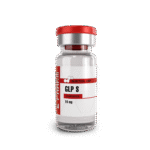
A peptide is only as protected as its primary packaging allows. High-quality vial stability depends on a complete container-closure system: the glass vial, the stopper, the crimp seal, and the headspace environment inside the package.
Glass quality matters because the vial must resist contamination, interaction, and damage during normal shipping and storage. The stopper must create a dependable barrier against moisture and outside air. A weak closure can undermine an otherwise excellent lyophilized product by allowing humidity ingress over time.
Headspace management also matters. Limiting oxygen exposure can help protect peptides that are susceptible to oxidation. Light-resistant packaging may be appropriate for materials with light sensitivity. These are not cosmetic decisions. They are practical controls designed around known degradation risks.
A premium vial should also be clearly labeled with the relevant product identity, lot information, and storage guidance. Traceability supports accountability. If a supplier cannot connect a vial to a specific batch and associated quality records, buyers have less basis for confidence in its consistency.
Manufacturing Controls Determine Batch-to-Batch Consistency
Stability is not created at the moment a label is applied. It is built through disciplined manufacturing controls, including raw material qualification, calibrated equipment, controlled filling procedures, environmental monitoring, and documented batch records.
For a supplier focused on dependable research materials, third-party analytical testing is a meaningful trust marker. Identity and purity testing help establish what is in the vial at release. When paired with appropriate stability programs, these results give buyers a clearer picture of whether the material is likely to perform consistently under its stated conditions.
However, purity and stability are related but not identical. A vial can test highly pure when it leaves the facility and still lose quality if its packaging, storage, or transport conditions are poor. The best quality systems address both the starting analytical result and the product’s ability to retain that result over time.
At ASN-LABS, the standard buyers should expect is not vague quality language. It is a professional framework built around lab-tested materials, controlled sourcing, lot-level accountability, and packaging designed to support the integrity of research compounds from fulfillment through delivery.
Storage Conditions Can Preserve or Undercut Quality
Even a well-manufactured peptide vial has limits. Temperature excursions, direct light, repeated warming and cooling, and exposure to moisture can accelerate degradation. Storage instructions exist because they reflect the material’s risk profile, not because they are generic fine print.
For unopened lyophilized vials, the supplier’s label and accompanying handling documentation should be the primary reference. Buyers should avoid assuming that a storage approach suitable for one peptide applies to another. The material’s form also matters. A dry lyophilized preparation may tolerate conditions differently than a solution, which is generally more vulnerable to chemical and physical change.
Transport is part of the equation as well. Fast, reliable fulfillment reduces unnecessary time in uncontrolled conditions, particularly during seasonal heat or cold. Still, speed alone does not guarantee protection. Appropriate packaging, sensible inventory handling, and clear communication around storage are what turn shipping into a credible quality control measure.
How to Evaluate a Supplier’s Stability Claims
The strongest suppliers make stability easier to assess because they support their claims with operational signals. Look beyond aggressive product descriptions and evaluate whether the company communicates lot traceability, analytical testing, manufacturing standards, packaging discipline, and clear research-use positioning.
Be cautious with absolute claims. No peptide is invulnerable to mishandling, and no responsible quality program should suggest otherwise. Stability depends on the compound, dosage form, packaging system, duration of storage, and real-world exposure conditions. Specificity is more credible than hype.
Questions worth asking include whether testing is tied to identifiable batches, whether storage guidance is visible and consistent, whether the vial is professionally sealed and labeled, and whether the supplier can explain its quality controls without hiding behind buzzwords. These details separate a research-focused operation from a reseller relying on packaging alone.
Stability Is a Chain of Decisions
What makes peptide vials stable is not one feature, one test result, or one storage instruction. It is the combined effect of a suitable peptide formulation, controlled lyophilization, moisture-resistant packaging, reliable closure integrity, verified manufacturing practices, and disciplined handling after release.
For performance-minded researchers, that standard is worth demanding. Choose materials backed by evidence, follow the product-specific storage guidance, and treat every vial as a precision research product rather than a generic commodity. Quality is preserved through the same discipline used to create it.